
Trusting AI in Engineering Workflows – Ep 121

Twitter
Facebook
LinkedIn
Pinterest

Episode AECT 121: Trusting AI workflows is essential for modern engineering as it enables faster, data-driven decision making while maintaining necessary human oversight. This episode explores practical strategies to build trust in AI through governance, boundary setting, and accountability to reshape engineering processes.

What are Engineering AI workflows?

Engineering AI workflows refer to the process of integrating artificial intelligence into engineering tasks in a manner that maintains accuracy, accountability, and appropriate human review. It involves establishing governance frameworks to verify AI outputs, manage risks, and enhance productivity without compromising quality or safety.

[video_schema]

How can engineering firms build trust in AI workflows?

Engineering firms can build trust in AI workflows by implementing governance frameworks that include evidence-based verification, clear boundaries on AI use, and maintaining human accountability for AI outputs. Gradual adoption combined with proper risk assessment supports confidence in AI-generated results.

  • Use evidence-supported verification of AI results
  • Establish boundaries for AI application in critical tasks
  • Ensure human accountability for AI outputs
  • Adopt AI gradually with risk-proportional measures

What role does governance play in adopting AI in engineering?

Governance in AI adoption defines the rules and controls that specify when AI requires verification, what boundaries users must adhere to, and who is accountable for the outputs. Proper governance accelerates AI usage by removing uncertainties and ensuring responsible and safe implementation.

  • Defines evidence needs for trusting AI
  • Sets boundaries on permissible AI use
  • Assigns accountability to users
  • Helps balance innovation with risk management

What types of AI outputs need human verification?

High-risk AI outputs such as engineering calculations, design conclusions, and contractual interpretations require qualified human verification. Low-risk AI tasks like drafting emails or brainstorming may only need cursory review. The level of verification should be proportional to the risk involved.

  • High-risk outputs need qualified human review
  • Low-risk outputs require minimal review
  • Verification proportional to potential risk
  • Human judgment critical for safety-related AI tasks

How can AI systems validate each other in engineering tasks?

Using separate AI systems to independently check outputs can reduce the burden on human reviewers. One AI generates outputs while another AI validates them based on different data or assumptions, increasing accuracy and detecting discrepancies before human verification.

  • Separate AIs reduce human oversight requirements
  • Independent data sources improve validation
  • Helps identify errors and missed discrepancies
  • Enhances confidence in AI-generated results

What future engineering workflows could look like without traditional constraints?

Future engineering workflows could be fully integrated with AI, automating administrative and repetitive tasks, improving accuracy, and enabling engineers to focus on creativity and complex problem-solving. AI could also preemptively flag common issues and assist in design iterations, transforming traditional processes.

  • More automation in administrative tasks
  • AI-driven design accuracy improvements
  • Focus shift to creativity and strategy
  • Proactive issue detection and resolution

Why is it important to align leadership mindset for AI adoption?

A leadership mindset aligned with innovation and technology adoption is essential to drive AI integration successfully. Leaders must support a culture open to change, enable experimentation, address risk aversion, and allocate resources to foster AI adoption throughout the organization.

  • Leadership sets the organizational culture
  • Supports risk-taking and innovation
  • Allocates resources for AI initiatives
  • Encourages continuous learning and adaptation

How do engineering firms identify and support AI innovators within their teams?

Firms can identify AI innovators by finding individuals passionate about improving workflows and providing them with resources and autonomy to experiment with AI solutions. Enabling these innovators fosters momentum and facilitates wider AI adoption across the organization.

  • Find individuals motivated to improve workflows
  • Provide tools and support for AI projects
  • Allow room for experimentation and failure
  • Celebrate and scale successful AI initiatives

What strategies help overcome risk aversion to AI adoption in engineering?

Overcoming risk aversion involves embracing a test-and-learn mindset, starting with small AI projects to demonstrate value, learning from failures and successes, and building confidence gradually. Leaders must encourage this culture and avoid punitive responses to experimentation risks.

  • Promote a test-and-learn approach
  • Start with manageable pilot projects
  • Encourage learning from failures
  • Build confidence through incremental successes

Elevate Engineering with EMI AI Training

EMI training offers practical courses to implement AI governance and trust in workflows. Enhance your team’s skills to lead AI adoption with confidence.

Learn About PM Training For AEC Professionals →

Meet the Speakers

Nick Heim

Your Host

Nick Heim, P.E.

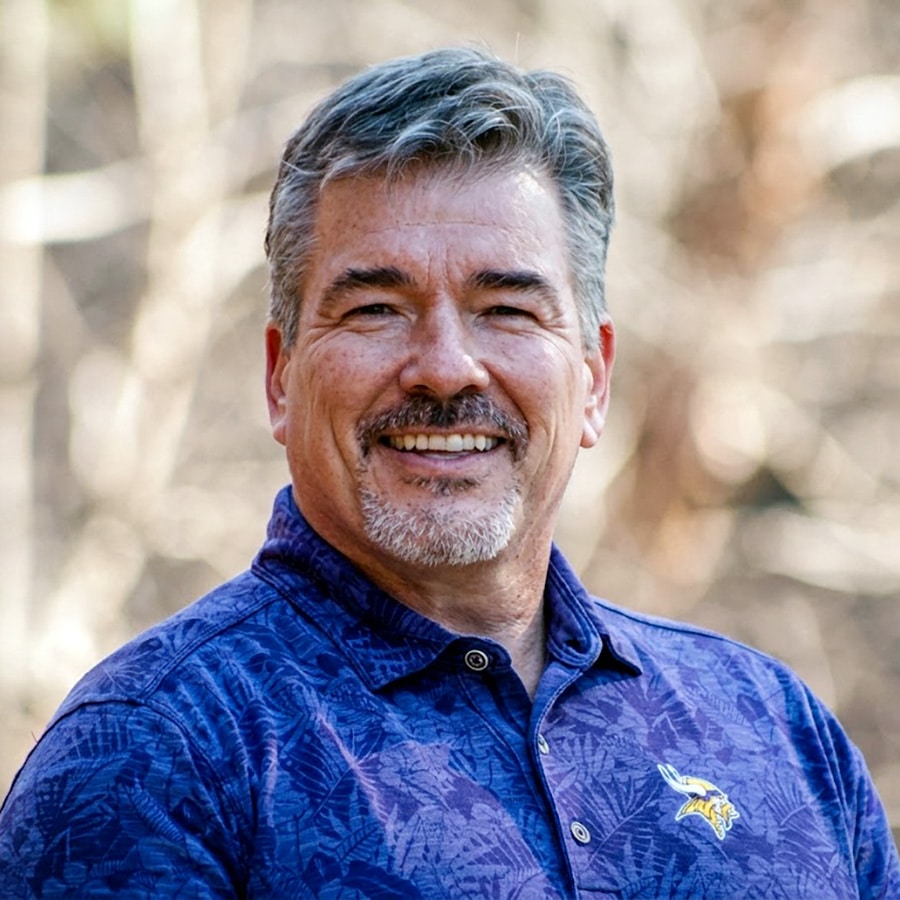
Nick Heim, P.E., is a civil engineer with nearly a decade of experience in the repair and restoration of existing structures. Nick is the host of the AEC AI & Tech Strategy Podcast, and co-founder of Trinovate Advisors – an advisory firm focused on human-centered innovation in AEC. In all of his endeavors, Nick brings practical insights and expertise to listeners and clients worldwide. Nick’s interests lie at the intersection between the built world and technology, and he can be found looking for the ever-changing answer to the question, “How can we do this better?
Brock Storrusten, PE

Guest Expert

Brock Storrusten, PE

Chief Strategy Officer at WithersRavenel

Brock has 38 years of leadership in the engineering and planning industry. He has served as minority Owner of a Professional Services Firm, Office Manager, City Engineer, Director of Land Development, Chief Growth Officer, and currently as Chief Strategy Officer at WithersRavenel in North Carolina where he has been employed for 10 years. Currently, as Chief Strategy Officer, he leads strategy formulation and management, including corporate visioning, growth strategies, strategic planning and implementation, and leading strategic initiatives such as acquisitions, business transformation, innovation, and partnerships. He also assists with organizational development, risk management, client experience, recruitment, and employee experience.

Beyond his development and corporate experience, he has substantial experience providing planning, engineering, and governance assistance to and within local and state governments. He has been a member of several Planning and Zoning Boards, municipal committees, and non-profit Boards and is currently active in ACEC’s Technology and Market Intelligence Committees and a board member for a 501.c.4.

Brock is a Professional Engineer in North Carolina, South Carolina, Virginia, and North Dakota.  

He is married to Chandra Storrusten and lives in Cary, NC, and is a proud grandfather.

Christopher Johnson, PMP, MBA

Guest Expert

Christopher Johnson, PMP, MBA

IT Director at WithersRavenel

Christopher Johnson, PMP, MBA, is an accomplished technology executive with more than 30 years of experience leading IT operations, infrastructure, strategic planning, project management, and acquisition integration across engineering, healthcare, and technology organizations. As the Head of IT at WithersRavenel, he oversees companywide technology strategy, operations, cybersecurity, and scalable business solutions. Known for building high-performing teams and translating business needs into practical technology initiatives, Christopher has led multimillion-dollar infrastructure, security, development, and merger-integration programs. He holds bachelor’s and master’s degrees and is a certified Project Management Professional.
Resources Mentioned:

This post was optimized to help you quickly find answers. For the full discussion, please listen to the audio episode or watch the video above.


Nick Heim, P.E.
Host of the AEC AI & Tech Strategy Podcast, and Co-Founder of Trinovate Advisors

Subscribe through your platform of choice:

Subscribe To Our Newsletter

And Get Custom Content Delivered To You Weekly

PM Training
engineering management lessons
career readiness
Categories
TECC Sidebar Featured Final